
Duct cleaning: when it helps and when it does not
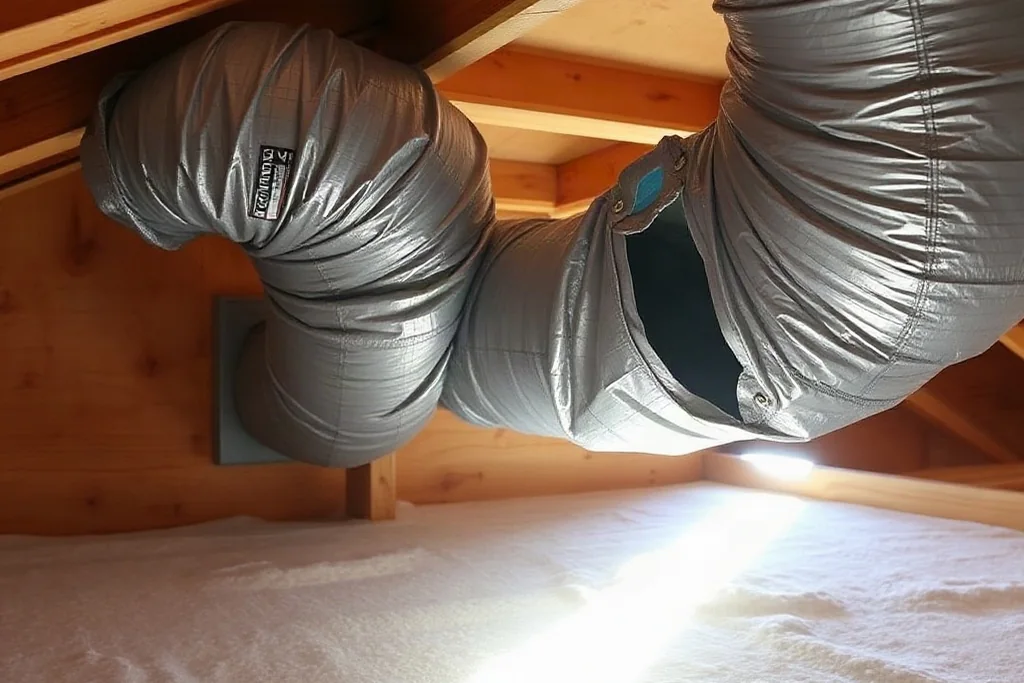
Duct cleaning is sold hard and researched less, which makes it unusually hard to judge. There are situations where it clearly helps and situations where the money is better spent elsewhere.
This separates the cases with real evidence behind them from the marketing claims, and suggests what to check first if you suspect the ductwork is the problem.
Filter change schedules that fit real homes
The standard advice is every one to three months, and the range is wide for good reasons. Pets, construction dust, open windows and long run times all load a filter faster, while a large filter in a lightly used home can last longer.
Check monthly and replace when the media is grey and matted rather than waiting for a date on the calendar. A filter that is visibly loaded has already been restricting airflow for weeks, which costs far more than the filter itself.
Humidity: the comfort band that matters
Most homes are comfortable between roughly thirty and fifty per cent relative humidity. Below that, skin, sinuses and woodwork dry out; above it, the air feels clammy, cooling becomes less effective and mould has the conditions it needs.
Measure it rather than guessing, because humidity is invisible and the thermostat does not report it. A simple gauge in a central room tells you more about comfort complaints than any other single measurement.
Whole-home humidifiers and dry winters
A whole-home humidifier adds moisture to the air moving through the ductwork, so every room benefits at once. It is controlled by a humidistat and fed by a water line, which is why it needs seasonal adjustment and periodic maintenance.
The maintenance is modest but real: a pad or canister to change, a water line to check and a control to set back for summer. Left unattended, a humidifier can over-humidify, which is worse for the house than dry air.
- Check the filter monthly and replace it when it looks loaded.
- Aim for a comfortable humidity band rather than the dryest air.
- Run bath and kitchen exhaust fans long enough to clear the room.
- Seal accessible duct leaks rather than relying on filtration alone.
Dehumidification when summer turns sticky
In a humid climate the cooling system is also the dehumidifier, and it only dehumidifies while it is running. An oversized unit that satisfies the thermostat quickly removes less moisture than a correctly sized one that runs longer.
When humidity stays high despite adequate cooling, the answer is usually airflow, sizing or a dedicated dehumidifier rather than a colder thermostat setting. Dropping the setting further just makes the house cold and damp.
| What you notice | What it usually means | What to do |
|---|---|---|
| Filter loads within weeks | Pets, dust or long run times | Check monthly instead of quarterly |
| Air feels clammy | Humidity too high | Measure, then tune cooling or dehumidify |
| Static shocks and dry skin | Humidity too low | Consider humidification with a humidistat |
| Dust returns quickly after cleaning | Duct leaks or unfiltered return | Seal accessible leaks and check returns |
Ventilation, fresh air and stale rooms
Modern homes are tighter than older ones, which is good for energy and harder for air exchange. Cooking, showers, cleaning products and occupants all add moisture and pollutants that need somewhere to go.
Bath and kitchen exhaust fans, run long enough to clear the room, are the simplest ventilation tool. A fan that runs for thirty seconds after a shower is mostly decoration; one that runs for fifteen minutes actually moves the moisture out.
Ductwork leaks and what they carry
Duct leaks do more than waste energy. A return leak in an attic or crawlspace can draw in insulation fibres, dust and damp air and deliver them straight into the living space, which no filter downstream can fully correct.
Sealing accessible duct joints and repairing disconnected runs improves both air quality and comfort. It is one of the few improvements that helps filtration, humidity control and energy use at the same time.
Duct cleaning: evidence versus marketing
Duct cleaning makes a real difference in specific situations: after renovation, after water damage, when there is visible debris or pest activity, or when a duct has been disconnected. In a clean, sealed system, the measured benefit is often small.
Be sceptical of before-and-after photographs of a single register and claims about health outcomes. If a company cannot explain what it will remove and why, the value of the job is hard to judge.
Filters, pets and allergy season
Pet dander, pollen and fine dust are the particles that matter most for allergy complaints, and they are exactly the sizes a good filter is designed to catch. Particle filtration and airflow have to be balanced, which is why filter choice is a trade-off rather than a ranking.
Run the fan more during high-pollen weeks to keep air moving through the filter, keep windows closed on the worst days, and change the filter on schedule. Small consistent habits outperform any single purchase.
What indoor air quality actually means
Indoor air quality is a combination of particles, gases, humidity and ventilation, not a single number on a box. Fine dust, pollen, pet dander, cooking and combustion by-products, and volatile compounds all contribute, and how they behave depends on the house as much as the equipment.
The practical goal is not sterile air. It is air that is filtered, at a comfortable humidity, and refreshed often enough that stale air and pollutants do not accumulate — and most of that is achieved with simple, well-maintained basics.
Seasonal dust and where it comes from
Dust is a mixture, and a share of it is generated indoors by people, pets, fabric and cooking rather than drifting in from outside. That is why filtration and ventilation work together — one captures particles, the other dilutes what is produced.
Regular vacuuming with a good filter, washing bedding hot and keeping the return path clear all reduce what the system has to handle. Small habits add up over a season.
Measuring before buying equipment
Air-quality purchases are easiest to justify when they answer a measured problem. A humidity reading, a filter-pressure check and a note about which rooms feel stale point to a specific fix rather than a general purchase.
Start with filtration, ventilation and humidity control, which cover most complaints. Specialist equipment comes after those basics, not instead of them.
Read next
MERV ratings: choosing a filter without choking your system
What the rating really measures, and why the thickest filter is not automatically the best one.
Whole-home humidifiers: comfort, woodwork and air quality
What a humidifier adds in a dry Raleigh winter, how it is controlled, and the maintenance it needs.
Indoor humidity: the range that keeps mould away
Why damp air costs more to cool, how to measure it, and when to dehumidify instead.