
Start here: the HVAC guide for Raleigh homeowners
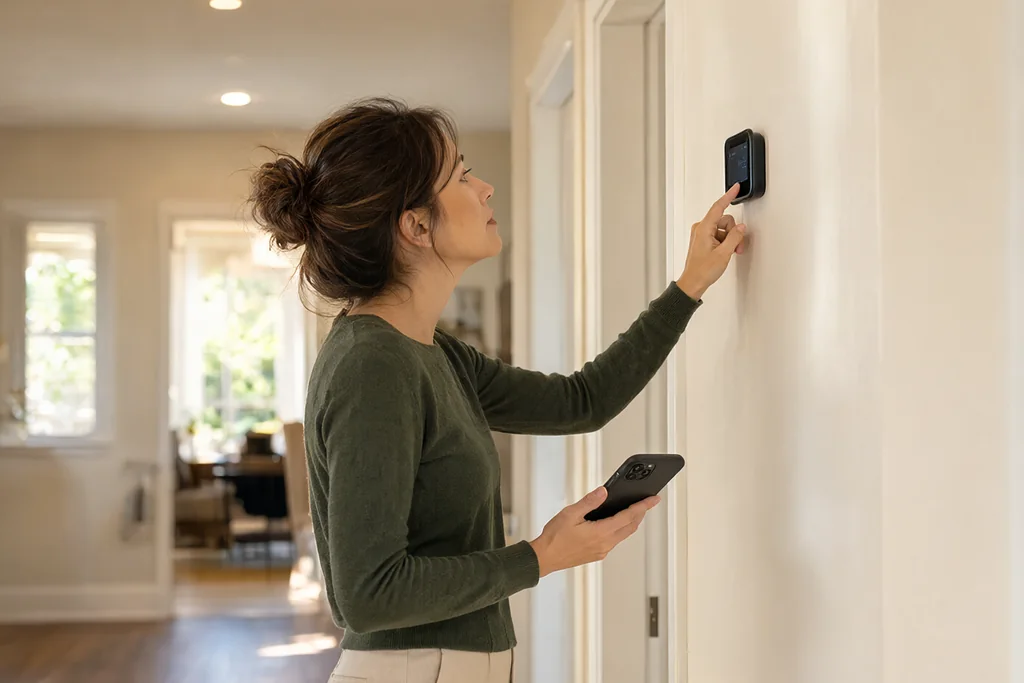
Most people call for help at the worst possible moment: the house is already uncomfortable and there is no time left to think. This page is a short map of where to start, written so you can work out what kind of help you need before anyone knocks on the door.
You do not need to diagnose your own equipment. You need to describe the symptom clearly, know which branch of the work you are in, and have a few facts ready so the first conversation is useful. Everything below is built around those three things.
Start with the symptom, not the equipment
"My system is broken" is not a symptom. "The upstairs never gets cool in the afternoon, but the downstairs is fine" is. A symptom points at a section of the system: airflow, the refrigerant circuit, the controls, the ductwork, or the way heat moves through the house. The clearer the description, the shorter the visit and the less guessing on site.
Before you read anything else, write down three things: what you notice, when it started, and whether it changes during the day. A problem that only appears in the afternoon in July is telling you something different from one that happens at three in the morning in January. Timing is half of the diagnosis.
| Symptom | Likely area | Where to start |
|---|---|---|
| No heat at all | Thermostat call, power, ignition or a safety lockout | Check the breaker, the service switch and the filter first |
| Air moves but it is not cold | Refrigerant charge, indoor coil or compressor | Note the outdoor unit behaviour, then book a diagnostic |
| Weak airflow, some rooms off | Filter, blower, duct leaks or closed dampers | Replace the filter and walk the registers |
| Runs constantly, never satisfies | Controls, sensor placement or the load on the system | Compare the thermostat reading with a room thermometer |
| New noise, rattle or hum | Blower, bearings, loose panels, duct vibration | Identify where the sound comes from and when it starts |
| Musty smell or heavy dust | Filtration, humidity, duct condition | Look at the filter and the return grille before anything else |
Then pick the branch: repair, service or replacement
Almost every call lands in one of three buckets, and mixing them up is what makes the process expensive. A repair fixes something that has failed. Service keeps something that still works from failing. Replacement is a decision about the equipment, not about the weather that week.
If the system has stopped doing its job, you are in repair territory, and the repairs section covers the noises, smells and behaviours that most often show up. If nothing is broken but the system has not been looked at in a year or more, that is service, and the maintenance section is the honest starting point. Replacement only becomes the conversation when the repair cost, the age of the equipment and the condition of the rest of the system stop lining up.
How to read this site
The material is grouped by the part of the system it belongs to, not by marketing categories. The heating section covers furnaces and the fire side of the equipment. Cooling covers the refrigerant circuit and everything that happens in summer. Heat pumps have their own section because they do both jobs and behave differently in each season. Air quality is where filtration, humidity and duct cleanliness live.
Read the section that matches your symptom, and read one article past the one that seems to fit. The second article is usually where the exception lives: the same complaint with a different cause, or the case where the obvious fix is the wrong one. Weighing a heat pump against a furnace? Start with the heat pump pages, then read the heating pages with them in mind.
- Write the model and serial number from the data plate on the indoor and outdoor units.
- Note the age of the equipment, or the year the house was built if the units came with it.
- Photograph the filter, the thermostat screen and any error code it displays.
- Write down the last date of any service, even if it was a filter change you did yourself.
- List which rooms are affected and whether the problem is the same on both floors.
What to gather before you call
Technicians are not detectives on a clock. Every fact you can hand over shortens the time spent ruling things out, and that time is the expensive part of any visit. A model number tells us what parts and controls we are likely dealing with before we arrive. A photograph of a thermostat error narrows the fault to a family of causes. The filter tells us whether the system has been breathing properly.
Be specific about the history as well. Did the system work well last month and then stop, or has it been fading over two summers? Did anything change: a new thermostat, a renovation, a filter of a different thickness? Small changes in the house show up as large changes in comfort.
What not to do yourself
There are jobs around an HVAC system that are genuinely homeowner work, and there are jobs that are not, and the line is drawn by risk rather than difficulty. Changing a filter, clearing debris from around the outdoor unit, keeping the condensate drain clear and setting a schedule on the thermostat are all reasonable. Everything downstream of that deserves a licensed technician.
Do not open the gas valve train, do not attempt to clean or recharge a refrigerant circuit, and do not work inside the electrical panel or on the wiring at the air handler. Gas work involves combustion, draft and leak testing that cannot be judged by smell. Refrigerant is handled under certification, and a system charged by guesswork will run worse than one that was simply left alone. Line voltage at the air handler is lethal and capacitors hold a charge after the power is off. If the repair needs a meter, a torch or a gauge set, stop and call.
Why Raleigh systems work all year
This part of North Carolina is a heat pump climate. Summers are long, hot and humid, winters are mild with only a handful of genuinely cold nights, and the shoulder seasons drift for weeks. That pattern means one piece of equipment often carries both jobs, and it runs in some form during most of the year rather than sitting idle for half of it.
The consequence is that wear accumulates steadily instead of seasonally. Coils stay wet from humidity, drain lines grow biological film, and a system checked once in spring will spend the following winter with whatever it developed over the summer. A rare hard freeze also matters more than its length suggests, because untested equipment tends to fail at the least convenient moment.
Start with what you can observe, write it down, and let the symptom choose the branch. That single habit will save you more than any shortcut, and it is the reason this page exists.
Read next
Gas furnace safety: what a proper inspection checks
A practical checklist of what a technician looks at, and the warning signs that should never wait for a routine visit.
A cracked heat exchanger: signs, risks and what comes next
Why the heat exchanger matters, how cracks are found, and why this is a safety issue rather than a comfort one.
Why your heating bill jumped this winter
Dirty burners, duct leaks, thermostat habits and the other reasons a bill climbs faster than the weather explains.