
Heat pump vs furnace: how to compare running costs fairly
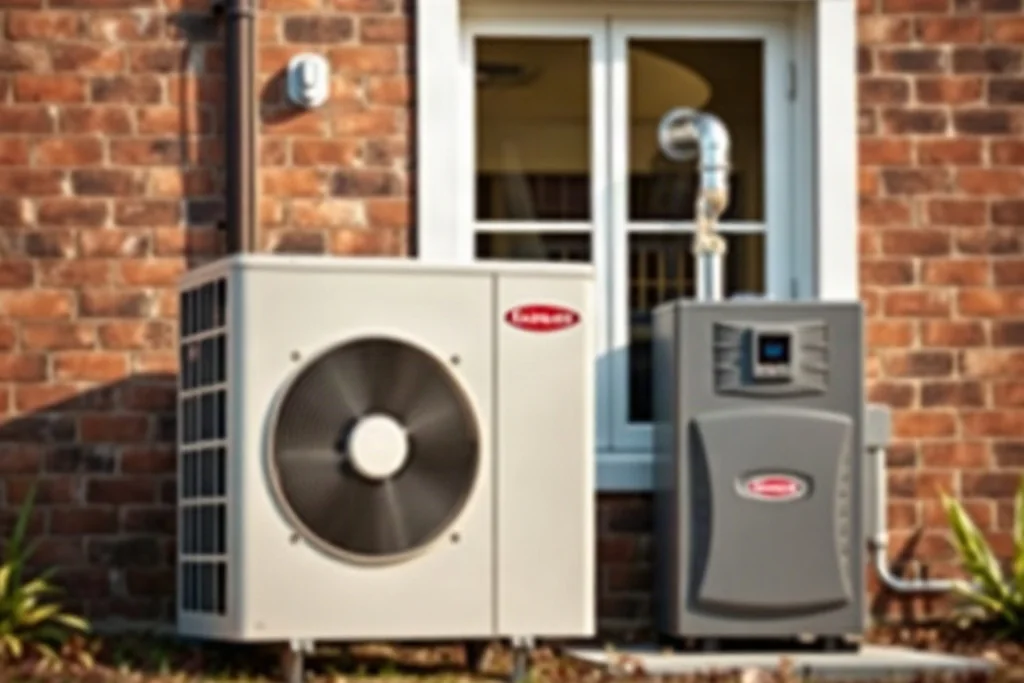
Comparing a heat pump with a furnace is harder than comparing two furnaces, because the two machines are rated differently and behave differently in cold weather. Headline efficiency numbers alone will mislead you.
This lays out the inputs that actually decide annual running cost — local climate, fuel prices, house condition and how the system is controlled — and the questions that produce a fair comparison.
Heat pumps on the coldest mornings
A heat pump delivers less heat as the outdoor temperature falls, because there is less warmth in the air to collect. Balance point is the temperature at which the pump can no longer hold the setting on its own and the backup has to help.
This is normal engineering, not a defect. Homes stay comfortable because the system is designed around that balance point; a house that suddenly cannot hold temperature in weather it handled last year needs a service call, not a new system.
Outdoor placement and clearance
The outdoor unit needs unobstructed air on all sides, a stable base and a position clear of drifting snow and roof runoff. In heating mode it runs for long periods, so a unit boxed in by a fence, shrubs or stored items works harder for the same result.
Raise the unit slightly above the expected snow line where that is practical, keep the top clear and never stack anything against the panels. Airflow is the single biggest thing a homeowner controls on a heat pump.
Refrigerant charge and efficiency
A heat pump depends on an exactly correct refrigerant charge, because it must work in two directions and across a wide temperature range. Undercharge or overcharge costs capacity in both modes and raises the compressor's workload.
Charging is done by measuring superheat or subcooling against the manufacturer's specification, not by watching a gauge until the needle looks reasonable. If the charge has drifted, a technician also needs to know why — the circuit is sealed.
- Leave the outdoor unit clear on all sides, all year round.
- Use modest setbacks so auxiliary heat stays occasional.
- Treat light frost that clears as normal, persistent ice as a fault.
- Ask for a service that tests heating and cooling modes.
Thermostat setbacks that backfire
Heat pumps recover slowly, so a large setback can force auxiliary heat to run during the morning warm-up and cost more than the overnight saving. The bigger the drop, the more likely the backup becomes the recovery method.
Use a modest setback, or a schedule with enough lead time that the pump can recover on its own. Many smart thermostats have a heat-pump mode that limits how aggressively the backup is used, and it is worth switching on.
| What you notice | What it usually means | What to do |
|---|---|---|
| Light frost, then clears | Normal defrost cycle | No action needed |
| Thick ice that persists | Defrost control or charge fault | Book a service, do not keep running |
| Auxiliary heat runs constantly | Backup carrying the load | Check charge, airflow and thermostat settings |
| Outdoor unit unusually loud | Fan, mount or compressor | Treat a sudden change as a mechanical fault |
Noise, vibration and the outdoor unit
A heat pump is louder in heating mode than in cooling, especially during defrost and on very cold starts. A steady hum is normal; a new rattle, a metallic scrape or a sudden increase in volume usually points to a fan, a mount or a compressor issue.
Check that the unit is level and that nothing has been stacked against it. If the noise started suddenly and comes with reduced performance, treat it as a mechanical fault rather than a seasonal quirk.
Comparing a heat pump with a furnace fairly
The honest comparison uses efficiency ratings, local climate and the cost of each fuel, not the sticker price alone. A heat pump's efficiency rating works differently from a furnace's, and its practical performance depends on how cold it gets where you live.
Ask for a comparison of annual running cost for your house rather than of headline efficiency numbers. The right answer in Raleigh is often a heat pump, sometimes a dual-fuel setup, and occasionally a furnace — it depends on the house as much as the equipment.
Maintenance that keeps a heat pump efficient
A heat pump works year-round, so it accumulates roughly twice the running hours of a cooling-only system. Filters, coils, drains, the reversing valve and the defrost controls all need attention once a year, ideally before the season that stresses them.
Two habits matter most between visits: keep the filter clean and keep the outdoor coil clear. Those two jobs protect airflow in both modes, and airflow is where most efficiency is quietly lost.
One system that heats and cools
A heat pump is an air conditioner that can run backwards. In cooling it collects heat from the house and rejects it outdoors; in heating it reverses the refrigerant flow and pulls heat out of the outside air, then releases it inside.
That is why a heat pump moves heat instead of creating it, and why it can be far more efficient than a furnace per unit of energy. The trade-offs are gentler, slower warm-up and performance that falls off as outdoor temperatures drop.
How the defrost cycle works
In heating mode the outdoor coil runs colder than the air around it, so moisture in that air condenses and freezes on the fins. Left alone, that frost would block airflow and strangle the system, so the unit periodically reverses for a few minutes to melt it.
During defrost the outdoor fan stops, the valve reverses and the system briefly cools the house instead of heating it. Steam rising from the outdoor unit on a cold morning is usually a healthy sign, not a fault.
What a heat pump service visit should confirm
A heat pump service confirms both modes, the reversing valve, the defrost controls, the charge, the outdoor coil and the auxiliary heat. A visit that only tests cooling has checked half of a year-round system.
Ask for readings in both modes and a note on whether the auxiliary elements were tested. That combination is what tells you the system will still heat a house in January.
Why heat pumps like steady settings
Because a heat pump heats gently, it performs best when it is left to run in long cycles at a steady setting. Frequent large changes push it into recovery mode, where the backup elements do the work at a much higher cost.
If you want a setback, keep it modest and give the system time to recover on its own. A little patience uses the efficient mode; impatience switches to the expensive one.
Read next
Heat pump iced up in winter: normal defrost or a fault?
How the defrost cycle works, what frost is normal, and when ice means something is genuinely wrong.
Heat pump blowing cold air in heating mode
The everyday reasons a heat pump feels cool at the vents, and the faults worth calling about.
Auxiliary heat explained: why the strips run and what they cost
Emergency and auxiliary heat, when they should appear, and how they affect an electric bill.